
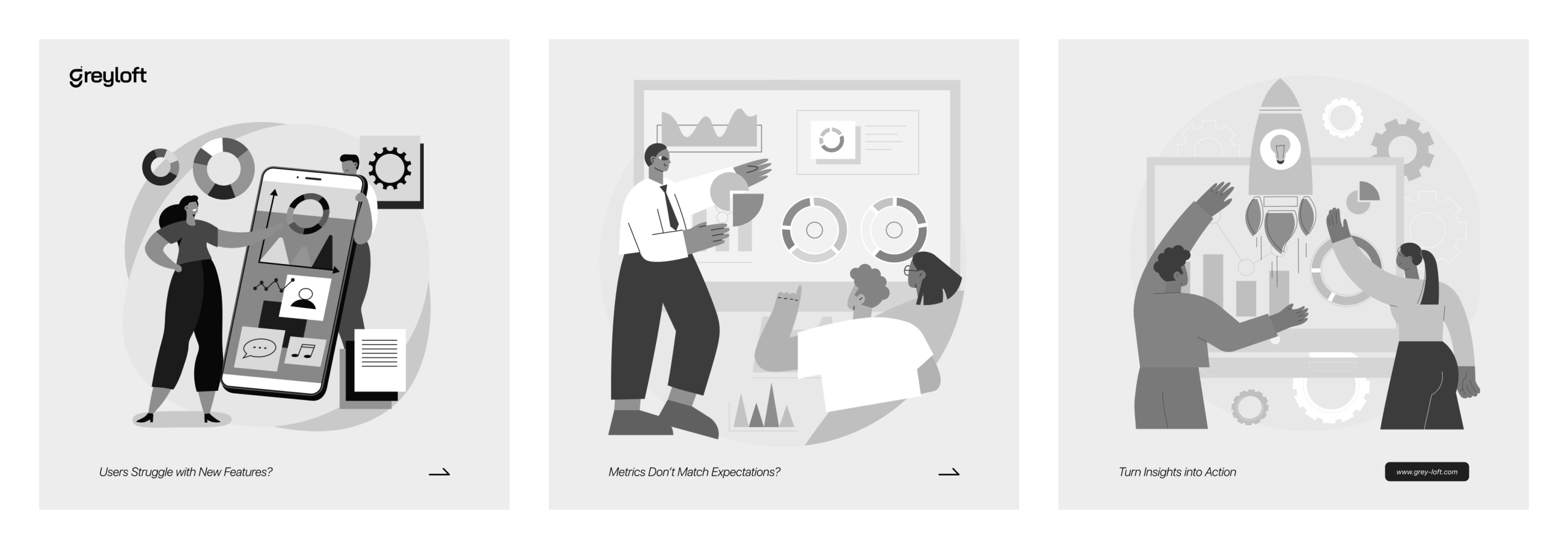
Shipping features is only half the battle. The real test comes after launch, when users interact with what you’ve built. Without the right feedback mechanisms, teams risk building in the dark, repeating mistakes, and missing opportunities for growth. Feedback loops keep your product aligned with user needs, helping you move faster and smarter.
That’s why building structured feedback loops into your product development process is essential. It ensures you’re not just releasing features, but also learning from them, improving them, and making every update more valuable. Here’s how to make that happen:
1. Capture Feedback Continuously
Use analytics, surveys, and session replays to see how users interact with your product. These insights highlight where users succeed, where they drop off, and what features they actually use. Real-time input prevents you from relying on assumptions.
2. Turn Feedback into Action
Collecting feedback is only the first step. The value comes from acting on it. Feed insights into your sprints, prioritize fixes or enhancements, and iterate quickly. Small, frequent improvements keep your product relevant and user-focused.
3. Measure Success
After making changes, track adoption, satisfaction, and retention. These metrics show whether your adjustments are working. Over time, this creates a cycle of improvement that compounds into long-term growth.
Closed feedback loops turn features into growth engines. They help you learn faster, build smarter, and deliver real value to your users.
Want to turn your product features into customer wins? GreyLoft can help you build tight feedback loops that drive smart iteration.


