
Most products don’t fail because of too few ideas. They fail because of too many extra features, which often create clutter, confuse users, and slow down development. The real challenge is not adding more, but choosing what truly matters.
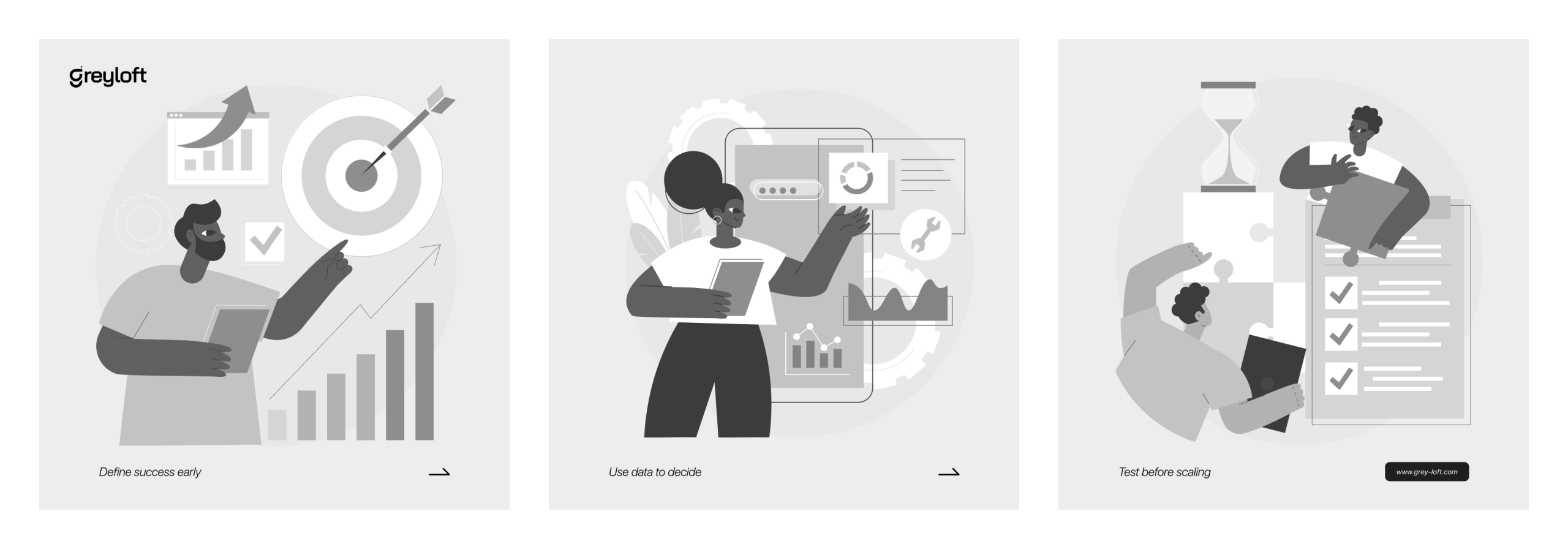
That’s where prioritization comes in. To stay focused, you need a simple framework that helps your team decide what to build and what to cut. The framework comes down to three steps: Setting clear goals, using data to guide decisions, and testing before scaling.
- Define Success Early
Every feature should map directly to a business or user goal. If it doesn’t, it’s noise. Set clear success criteria before building. This helps teams evaluate ideas objectively instead of relying on gut feelings or personal preferences. - Use Data to Decide
Customer feedback and usage analytics cut through assumptions. Focus on the problems that matter most to your users, not the loudest opinions in meetings. Data-driven prioritization ensures you invest in features that move the needle. - Test Before Scaling
Avoid wasting time and resources on unproven ideas. Build lean experiments first. If users don’t engage with a feature at a small scale, expanding it won’t help. Testing early minimizes risk and validates demand.
Every “yes” comes at the cost of ten “no’s.” Prioritization is about discipline, not limitation. With these, teams can stay focused and ensure every release delivers real value. Teams that focus build faster, deliver real value, and win user trust.
Want to cut through noise and deliver features that matter? GreyLoft can help you prioritize with clarity and confidence.


